
ZHANG Hua
260 x 300 x 170 cm
Installation | Copper, aluminum, stainless steel
2025~2026
6732
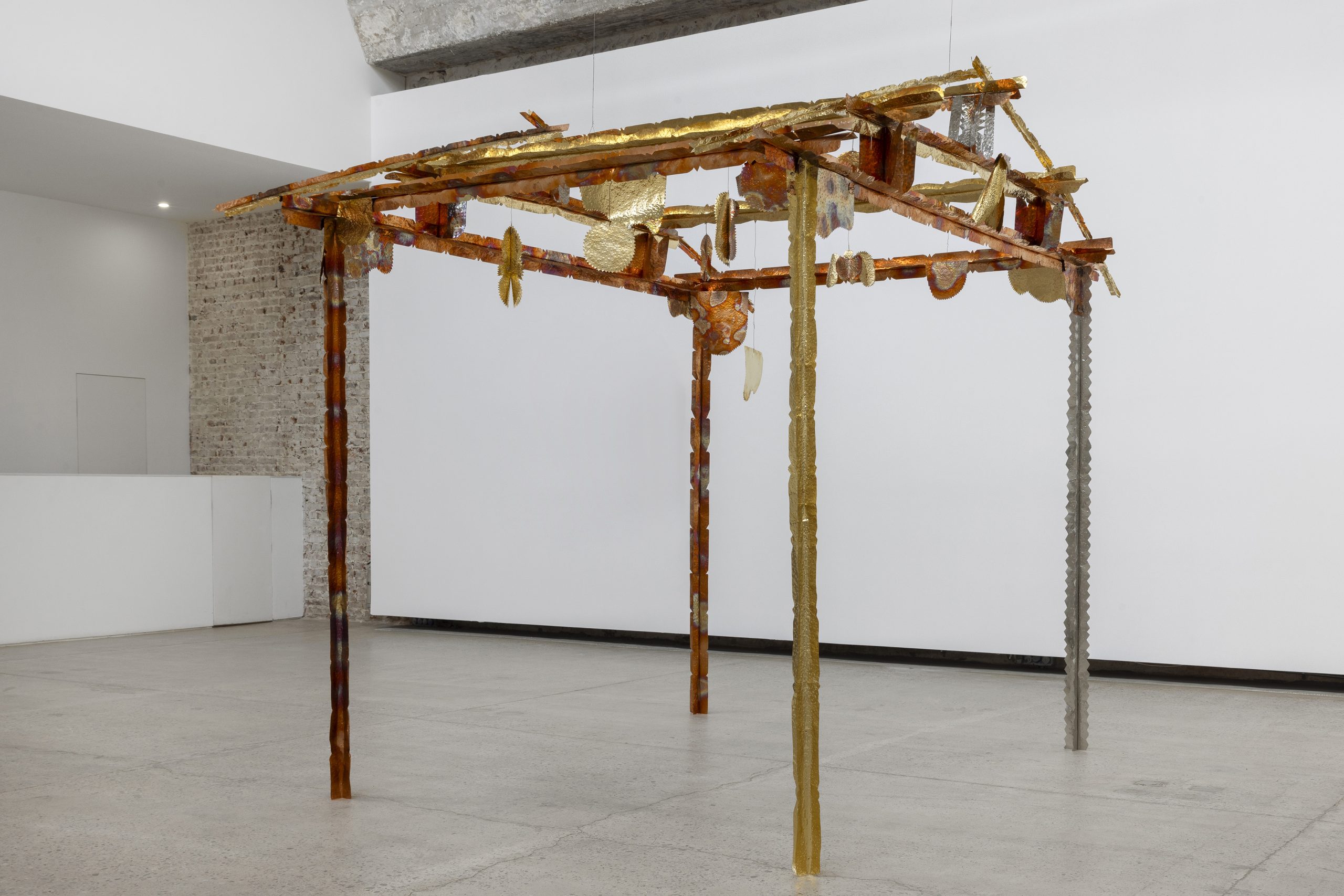
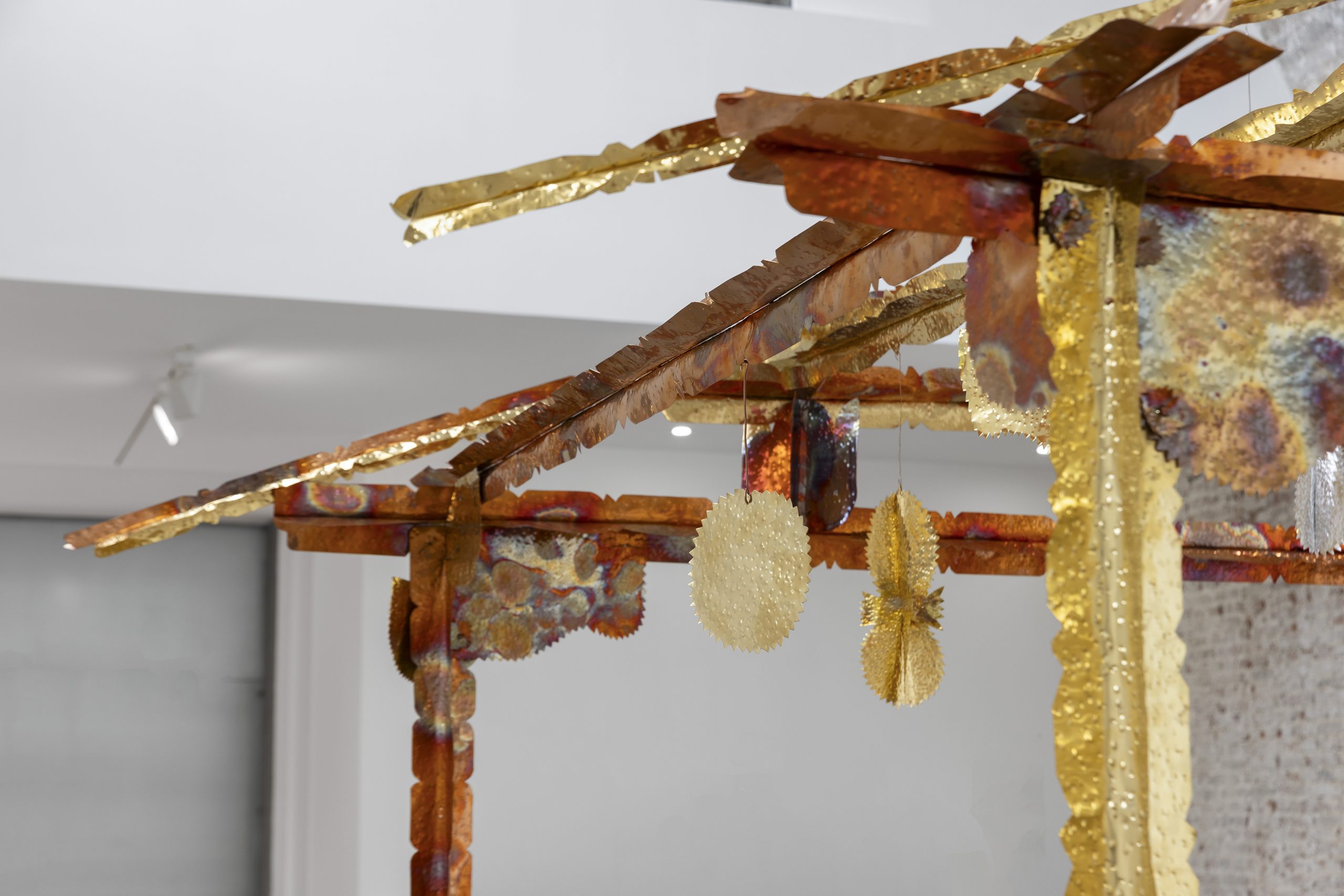
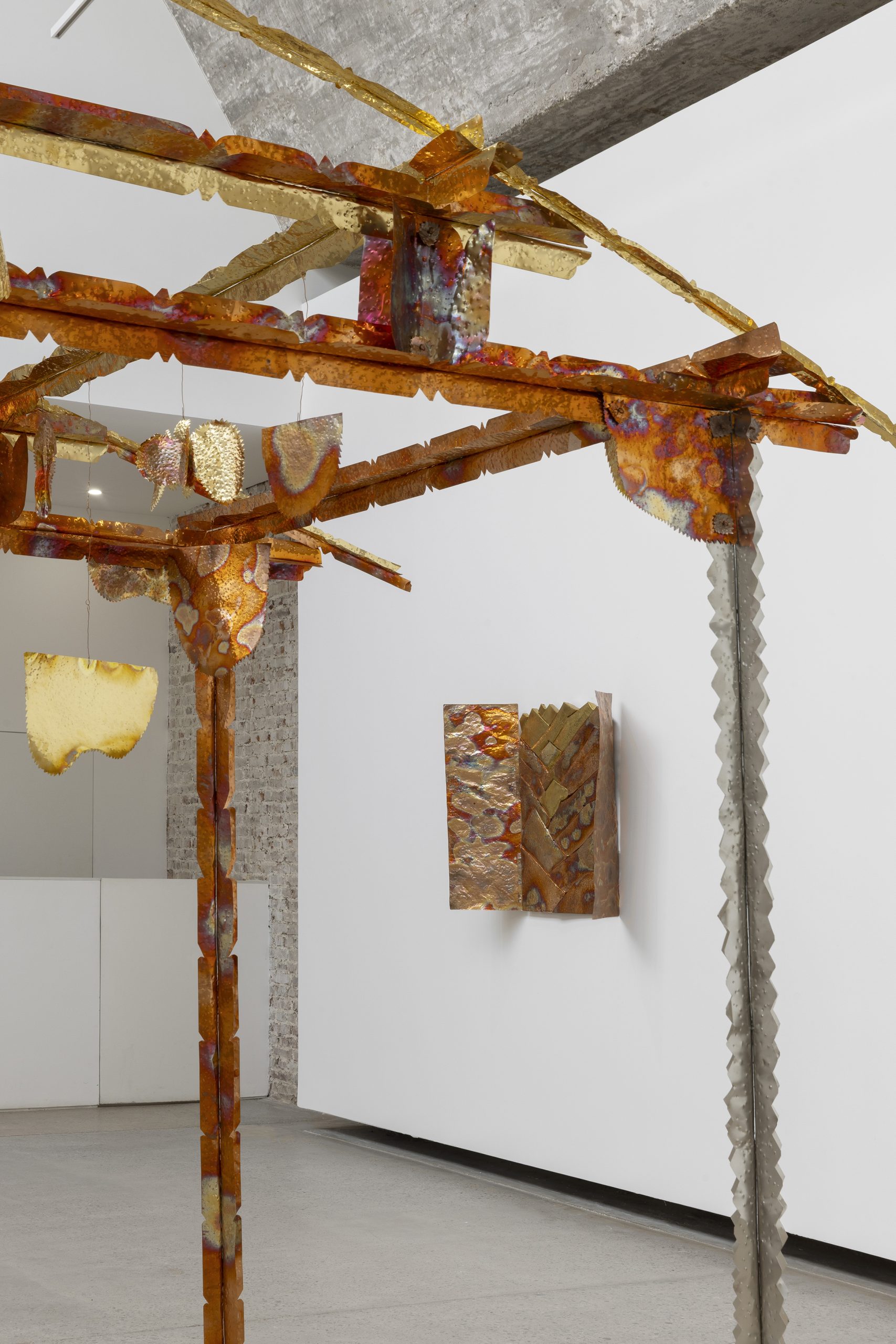
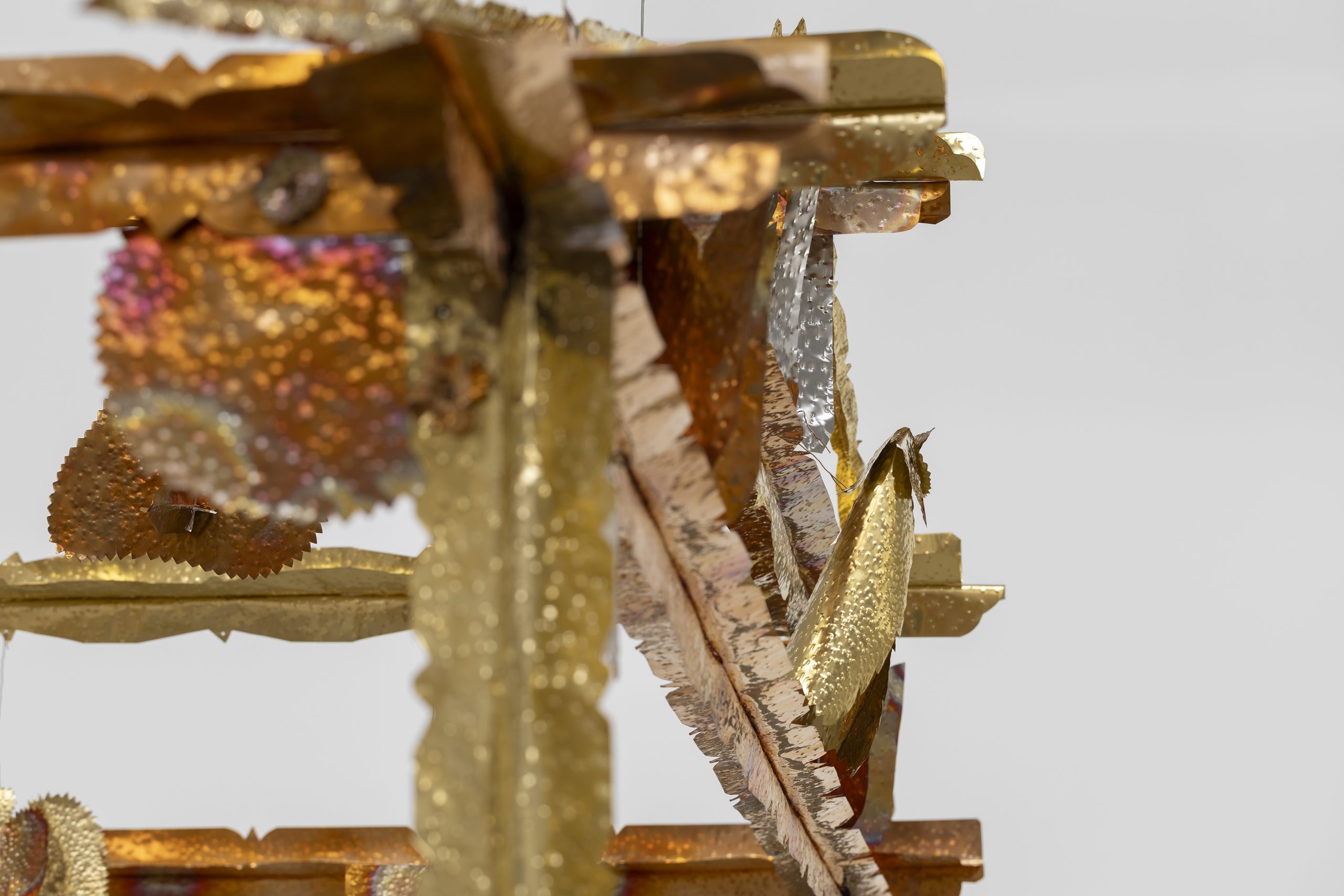
Honey Pavilion
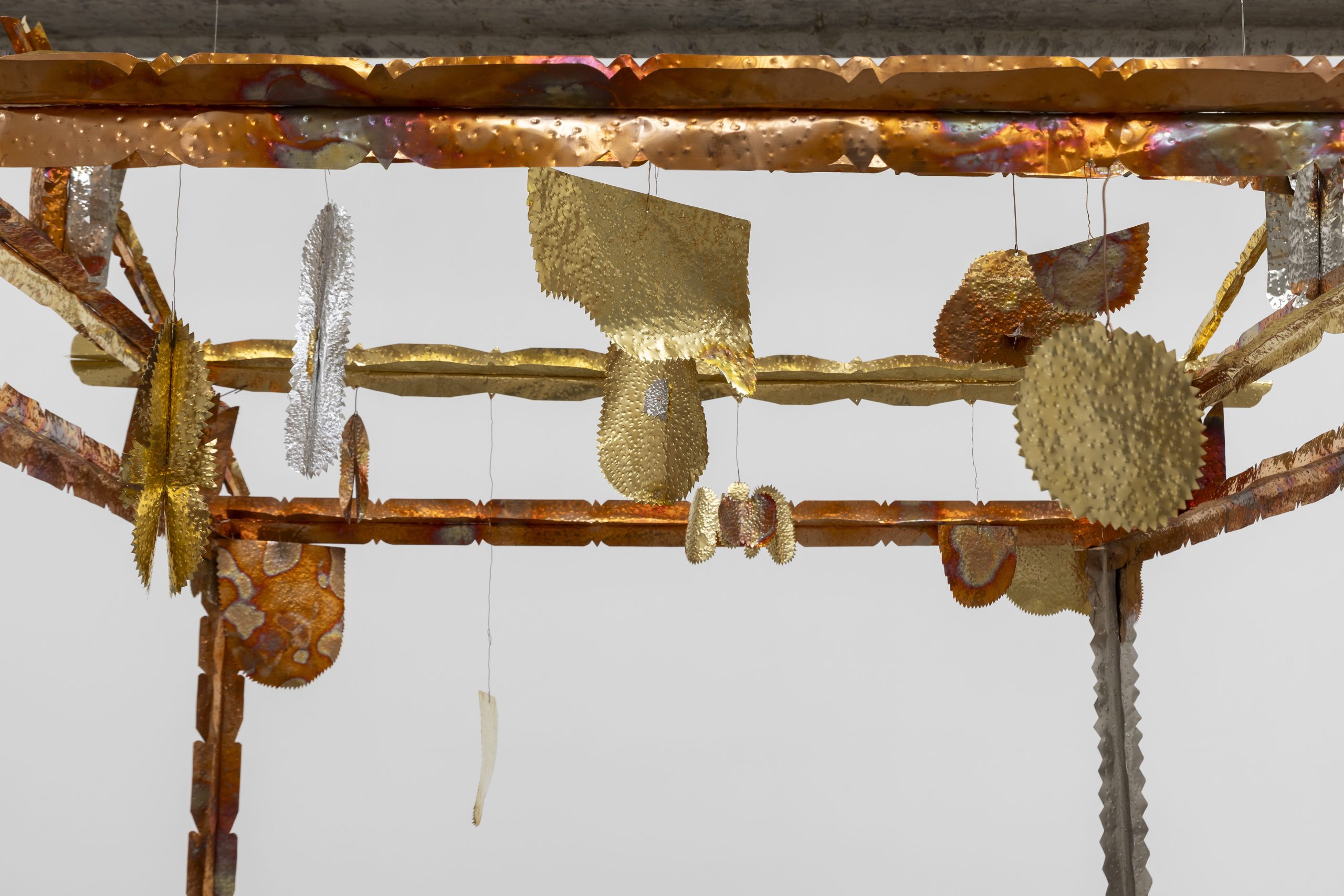
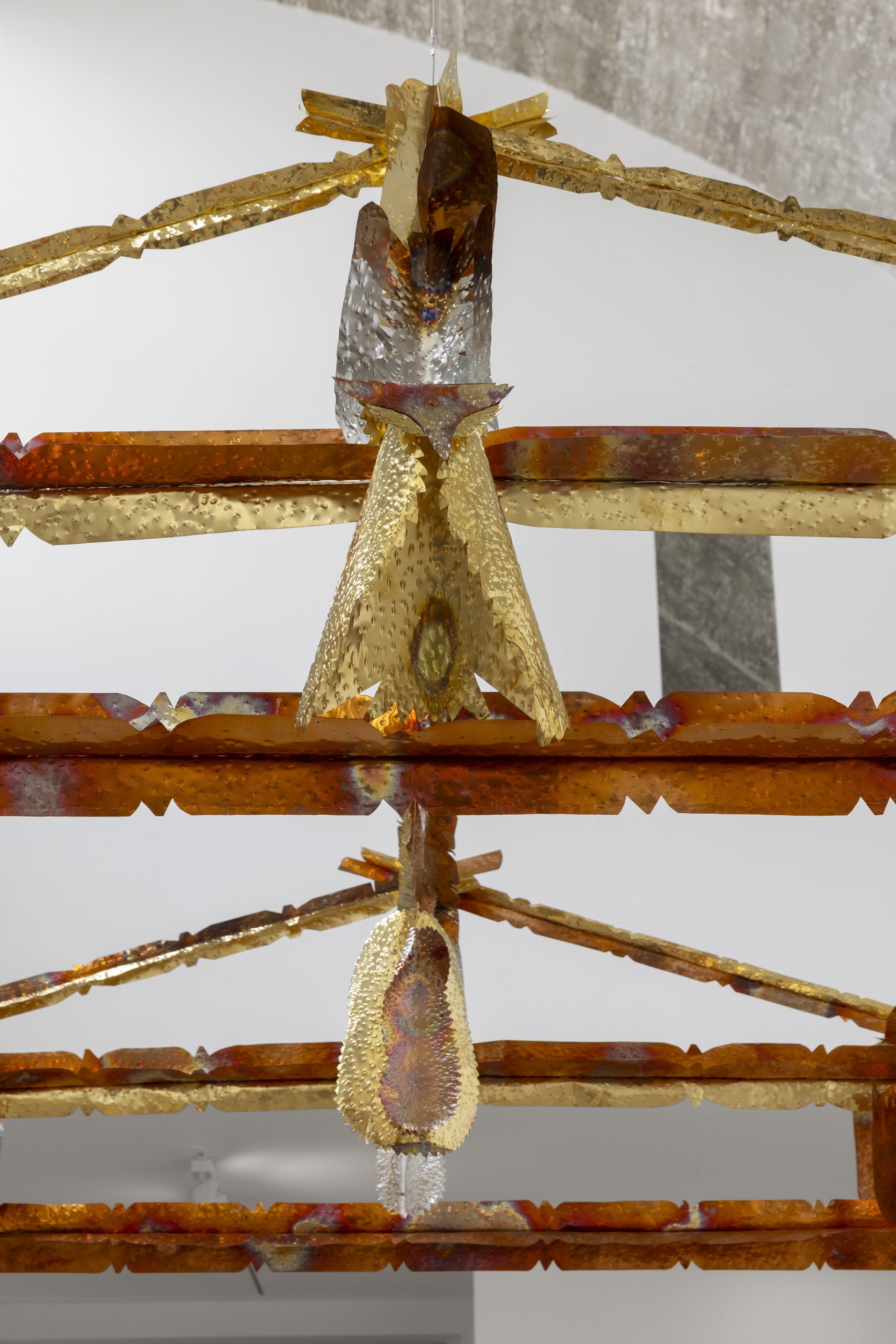
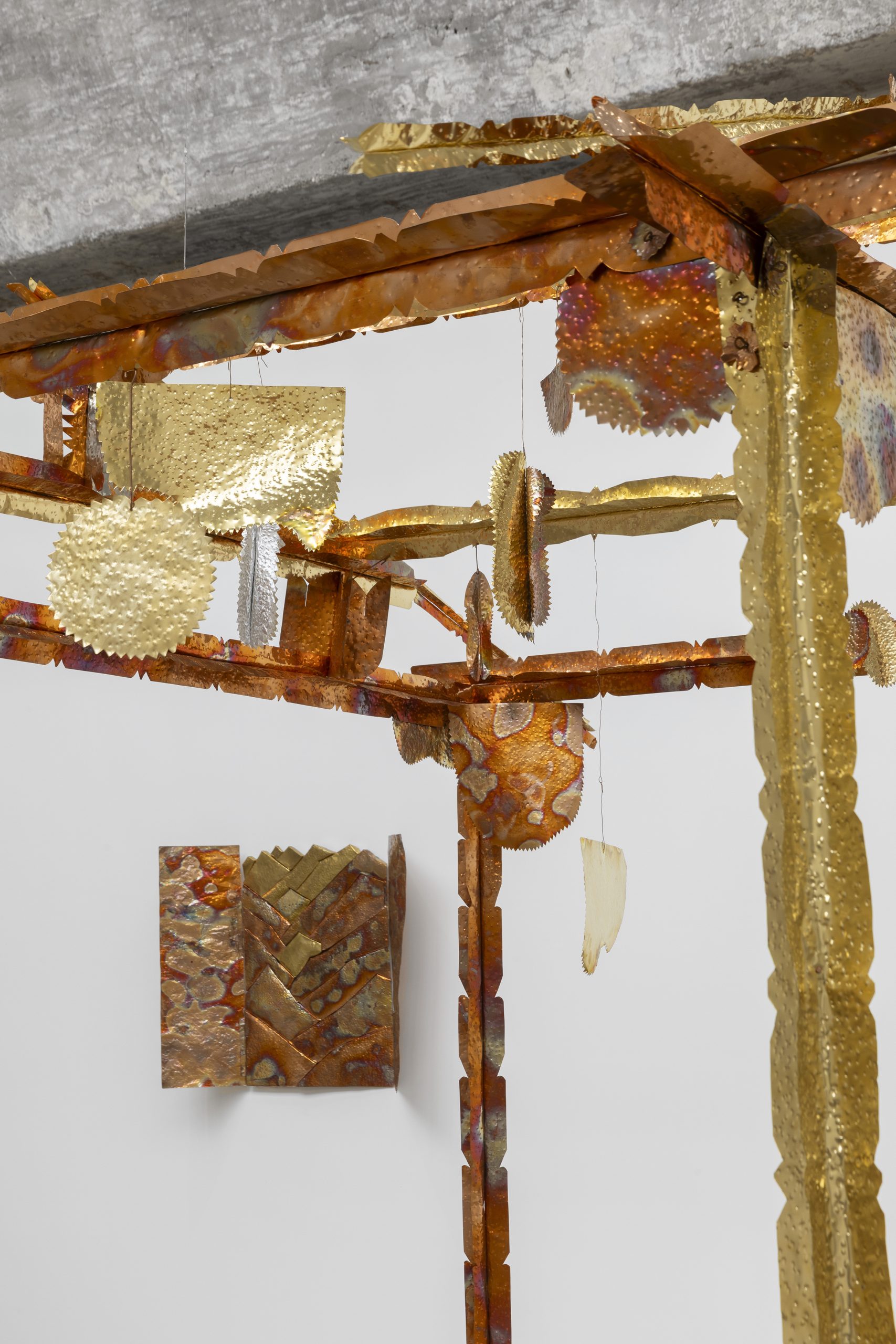
Honey Pavilion draws its form from the three-beam structure of traditional architecture, yet its shape is less drafted than grown—as if a plant had naturally risen into a sheltering space. Within its copper walls, the imagery of architecture, flora, fauna, and honeycomb interweaves into a spiritual field that is at once intimate and sacrosanct.
The work’s earthly origin is a pavilion in Zhang Hua’s Yunnan studio courtyard, built by his father and uncle by hand. In their local custom, the birth of a child calls for an addition to the house. This pavilion is not quite a home, but a spiritual space bequeathed by his elders—one that carries both familial affection and a way of life entwined with nature. The warmth of that protection is what Zhang Hua calls its “sweetness of space.”
Linguistically, Honey Pavilion also constitutes a reconfiguration of vernacular architecture. Zhang Hua pays particular attention to its contours—the silhouette that echoes the serrated visual language running through the exhibition. These undulating edges respond to natural forms while marking the most direct point of contact between humanity, architecture, and the wild. Ultimately, the work occupies a threshold—neither fully human nor fully natural, but a dwelling place for both body and spirit.